Industrial Teams: Estimate Digital Twin Cost From $10K Pilots to $1M+ Rollouts
Practical method for industrial teams to estimate digital twin cost. Ranges from $10K to $1M+, an activity based costing workflow, and a one week data audit.
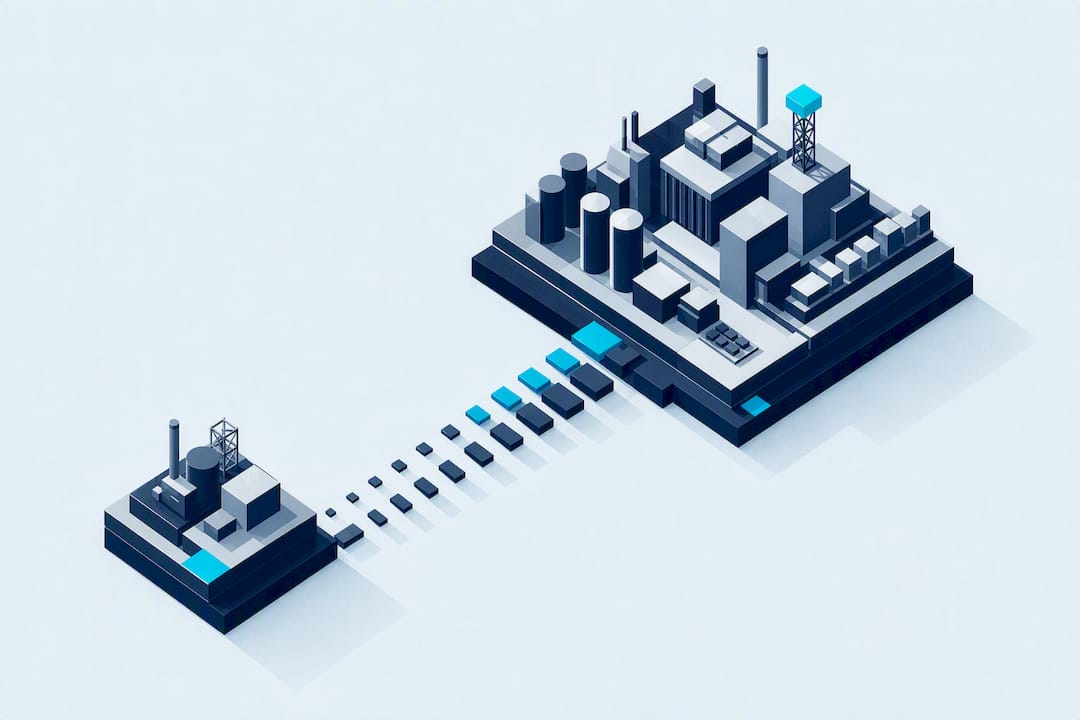
Digital twin projects generally run from around $10,000 for a limited proof of concept to well over $2,000,000 for a full enterprise deployment, and the single biggest swing factor is data integration complexity, not software licensing. Scope, asset count, and how ready your data is already will place your project somewhere in that band. The sections below walk through the ranges, the cost drivers, and a repeatable way to build your own estimate.
TL;DR:
Data integration and asset modeling complexity are the primary drivers of digital twin costs, often exceeding the software license expenses.
Pilot projects modeling a single asset can cost between $10,000 and $45,000, while enterprise systems covering multiple sites can reach over $1 million, with costs scaling with data readiness.
Using no-code, browser-based platforms with pre-built assets and protocols significantly reduces modeling and integration time, making pilots faster and more affordable.
Conducting an internal data audit before requesting vendor quotes is crucial, as poor data readiness can drastically inflate costs and cause budget overruns.
High-value use cases with clear operational savings, such as avoiding capital expenditure or reducing downtime, typically deliver ROI within 6 to 12 months.
Table of Contents
How Do You Estimate Digital Twin Cost With an Activity-Based Method?
Fixed Scope, Subscription, or Usage-Based: Which Pricing Model Fits?
How Do You Control Cost While Scaling a Digital Twin Program?
When Does a No-Code 3D SCADA Platform Lower Digital Twin Cost?
What the Research Actually Tells You About Digital Twin Cost
How Much Does a Digital Twin Cost at Different Scales?
The gap between a small pilot and an enterprise rollout is enormous, and it comes almost entirely from integration scope, not from the software itself.
A proof-of-concept digital twin, built to validate one use case on a handful of assets, typically lands between $10,000 and $45,000. That budget covers a limited set of sensors, a basic 3D model, and connection to one data source, often just enough to prove the concept works before anyone commits real money.
Mid-market pilots, the kind that cover a production line or a single building system, run $50,000 to $200,000. This tier usually includes real-time data feeds from multiple sensors, some simulation logic, and integration with at least one operational system like a PLC network.
Enterprise-scale systems, covering a full factory, a refinery, or a multi-building campus, climb into $1 million to $45 million territory. Costs escalate here because you’re not just modeling more assets, you’re integrating dozens of data sources, running continuous simulations, and maintaining the system across years of operation.
PoC: single use case, $10k to $45k, weeks to first results
Pilot: one line or building, $50k to $200k, months to deploy
Enterprise: multi-site or full-plant, $1M+, ongoing program budget
Practitioner benchmarks put production-line twins at $50,000 to $150,000 and full factory twins at $200,000 to $500,000 or more, which lines up closely with the mid-tier and enterprise ranges above.
What Actually Drives Digital Twin Pricing?
Software licensing is rarely the expensive part. The real cost sits in the work required to make your data usable and your assets modelable.
Data readiness and integration with ERP systems, PLCs, and historians consistently rank as the top cost driver. If your plant floor data lives in five incompatible formats across three legacy systems, someone has to standardize and clean it before a digital twin can use any of it. NIST’s economics report flags this data readiness work as a cost that frequently exceeds the software license itself.
Beyond integration, four other line items eat the budget:
Sensor retrofit for assets that lack the instrumentation a twin needs
3D asset modeling, especially for custom or legacy equipment with no existing CAD files
Simulation and machine learning development for predictive features
Cloud compute and storage for running simulations at scale
A warning sign that your budget will escalate: if nobody on the team can tell you how many distinct data formats exist across your source systems, integration cost is about to surprise you.
Pro Tip: Audit your data sources before you request vendor quotes. A one-week internal data audit often saves months of change-order negotiations later.
How Do You Estimate Digital Twin Cost With an Activity-Based Method?
Guessing at a number rarely survives a budget review. A structured, repeatable method does, and one already exists in the research literature.
An activity-based costing approach, published in Procedia CIRP and aligned with ISO 23247 concepts, breaks digital twin cost into six data activities: gathering, interaction, storage, processing, servitization, and maintenance. Each activity maps to specific cost buckets, personnel hours, and infrastructure needs.
Here’s how to apply it to your own project:
Count your signals. List every sensor, tag, or data point the twin will track.
Set your cadence. Decide how frequently each signal updates (real time, hourly, daily).
Map each of the six activities to cost. Assign engineering hours and infrastructure spend to gathering, storage, processing, and the rest.
Add archiving duration. Cost rises with how long you retain historical data.
Total across a fixed horizon (two years is the standard comparison window in the research).
A case study using this method found that a twin tracking one temperature signal cost roughly £4,780 over two years, while adding two acceleration signals to that same setup pushed the estimate to nearly £39,285. Signal count alone can move your total by an order of magnitude.
Fixed Scope, Subscription, or Usage-Based: Which Pricing Model Fits?
Vendors structure digital twin pricing four different ways, and each shifts risk between you and them differently.
Fixed-scope contracts work best when requirements are locked and stable. You know your total cost upfront, but any scope change triggers a costly amendment.
Subscription pricing spreads cost over time and usually bundles support and updates. It suits teams that want predictable monthly spend over a multi-year rollout.
Usage-based pricing, tied to data volume or API calls, rewards small pilots but can spike unexpectedly as you scale connected assets.
Hybrid models, combining a license fee with usage tiers, are common for mid-market deployments that expect to grow.
Ongoing operating costs matter as much as the initial contract. Cloud storage, data transfer, API calls, and compute for simulations all recur, and for some projects these costs grow faster than the original implementation spend. When negotiating, push for caps on API and call volumes, clarity on data egress fees, and a defined support SLA. Those three terms cause more budget surprises than the sticker price ever does.
What ROI and Payback Timeline Should You Expect?
The strongest business case comes from picking a use case where the financial upside is unambiguous, not from trying to twin everything at once.
High-stakes use cases, like avoided capital spending on a new production line or measurable downtime reduction on a bottleneck asset, generate ROI numbers that survive scrutiny in a budget meeting. Vague efficiency gains rarely do.
Most organizations that target high-value operational decisions see measurable savings within 6 to 12 months, with full payback commonly landing in the 12 to 24 month range.
Shorter paybacks tend to come from use cases with clear avoided cost (a prevented outage, a delayed capital purchase)
Longer paybacks usually involve broader visibility projects where savings are harder to isolate
Run a basic sensitivity check on your assumptions (best case, base case, worst case) before presenting a single payback number to leadership
A single-point ROI estimate invites pushback. A range built from three scenarios holds up far better.
How Do You Control Cost While Scaling a Digital Twin Program?
The projects that stay on budget almost always follow the same sequence, and the ones that blow their budgets almost always skip a step.
Start with one high-value line or asset. Prove the concept before committing enterprise dollars.
Validate ROI before scaling. Use the pilot’s actual numbers, not projections, to justify expansion.
Invest early in data readiness. Cleaning and standardizing data before development is cheaper than retrofitting it later.
Choose modular architecture and reuse asset models. Designing for scale from day one avoids the far higher cost of rebuilding later.
Monitor consumption and tier storage. Move cold historical data to cheaper storage tiers and set governance rules before scope creep sets in.
Pro Tip: Set a hard data governance policy before your second site goes live. Most cost overruns in multi-site rollouts trace back to inconsistent asset naming conventions, not technology limits.
When Does a No-Code 3D SCADA Platform Lower Digital Twin Cost?
Custom development makes sense when your project needs deeply specialized simulation logic that no off-the-shelf platform supports. For most industrial monitoring use cases, though, a no-code platform closes the gap between concept and working pilot far faster.
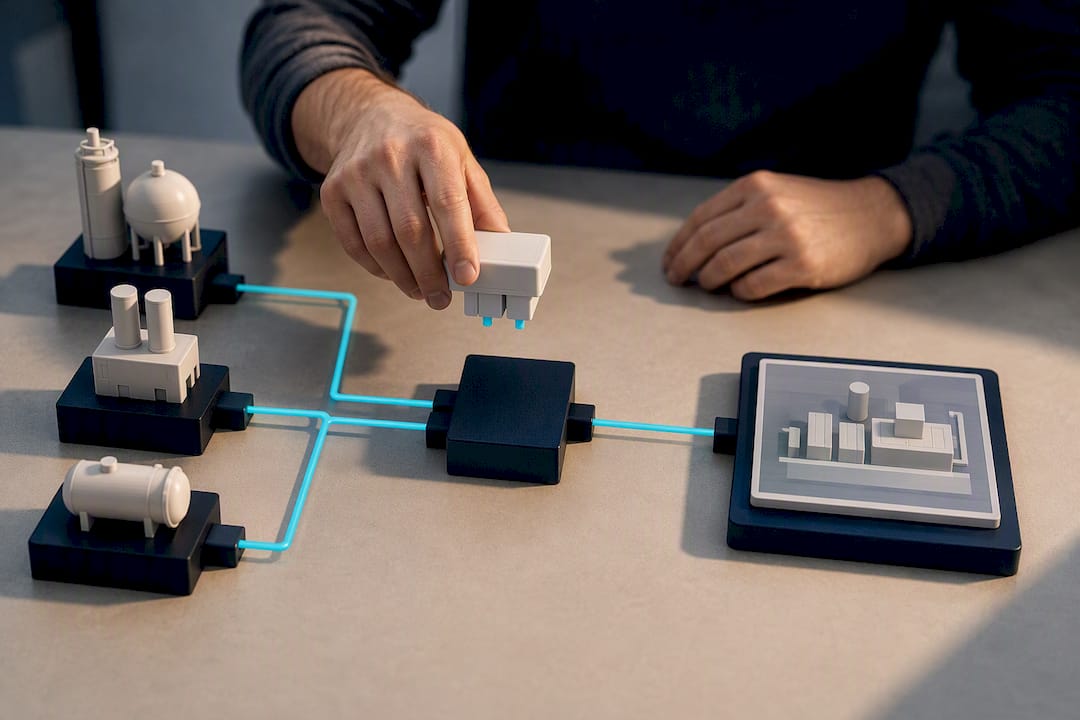
Kingfisher 3D SCADA is built specifically around that gap. It’s a browser-based platform with drag-and-drop modeling, AI-powered scene generation from schematics or photos, and built-in protocol drivers for OPC UA, Modbus, BACnet, and Siemens S7, so integration work that would otherwise require custom scripting becomes configuration instead.
The component marketplace, with more than 1,000 ready-made industrial assets, cuts one of the costliest line items directly: 3D asset modeling. Instead of building a pump or a valve model from scratch, teams pull one from the marketplace and connect it to live data.
No-code scene building reduces modeling hours compared to scripted 2D SCADA builds
Pre-built protocol drivers shorten the data integration timeline
The marketplace lowers per-asset modeling cost on repeat deployments
Teams with well-defined, standard industrial assets and a need to move fast on a pilot budget tend to get the most out of this approach.
What the Research Actually Tells You About Digital Twin Cost
Most advice on digital twin cost treats it as a single number to negotiate down. That’s the wrong frame entirely. The research points somewhere more useful: cost is a function of how much integration and data cleanup your organization needs, and that number is almost entirely within your control before you ever talk to a vendor.
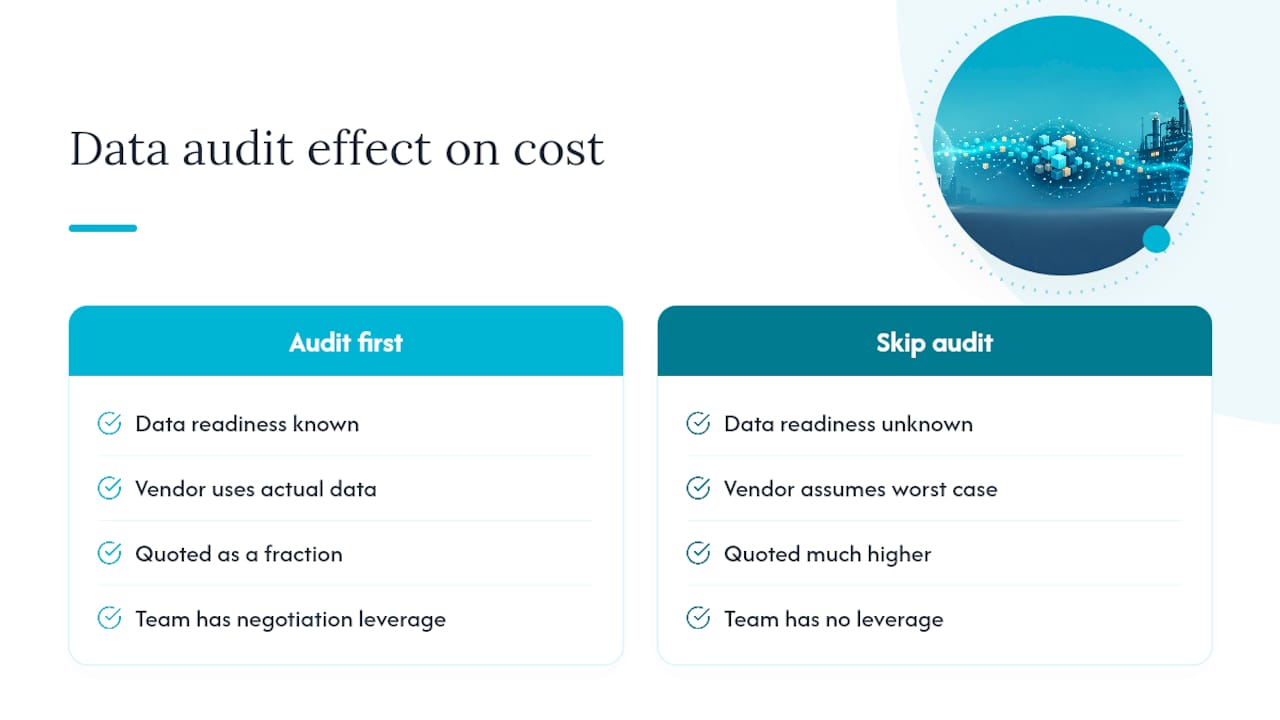
The conventional advice, “get quotes from three vendors and compare,” skips the step that actually determines your price: knowing your own data readiness before you ask for a number. A vendor pricing a project with clean, standardized data will quote a fraction of what the same vendor charges a company with five incompatible legacy systems. That difference has nothing to do with the software.
What I’d prioritize first, ahead of vendor selection entirely, is the internal data audit. Count your signals, map your formats, and know your integration complexity before requesting a single quote. Teams that do this walk into vendor conversations with leverage. Teams that skip it get quoted for the vendor’s worst-case assumptions about their data, because the vendor has no other information to go on.
— Trent
Get a Faster Path to a Working Digital Twin Pilot
A no-code, browser-based platform offers an alternative to custom-built integration projects for teams needing a working pilot without months of scripting or a specialized development team. With a no-code, browser-based design, engineers familiar with their plant floor can build a working 3D model themselves, without waiting on a systems integrator’s calendar.
If your project fits the pilot or mid-market range discussed above, the component marketplace and built-in protocol drivers cut real weeks off the modeling and integration phase, the two line items that consume most of a typical budget. That matters most for teams trying to prove ROI on a single production line before committing enterprise dollars to a full rollout.
Review the platform’s pricing tiers to see which license shape fits a pilot-scale deployment, or visit the main platform page to request a walkthrough of how the drag-and-drop builder works with your existing data sources.
Sources
For readers who want to go deeper than a single article, three sources anchor most of the figures above:
Economics of Digital Twins: Costs, Benefits, and Economic Decision Making (NIST)
Digital Twin for Manufacturing: Cost to Build, Software Pricing & ROI (Ecosire)
Teams evaluating a no-code path can review 3d-scada’s pricing structure directly.